Open Data
Without evidence there is no transparency: Community oversight of our local authorities
Data is evidence, and seeing it clearly is the first step to transform
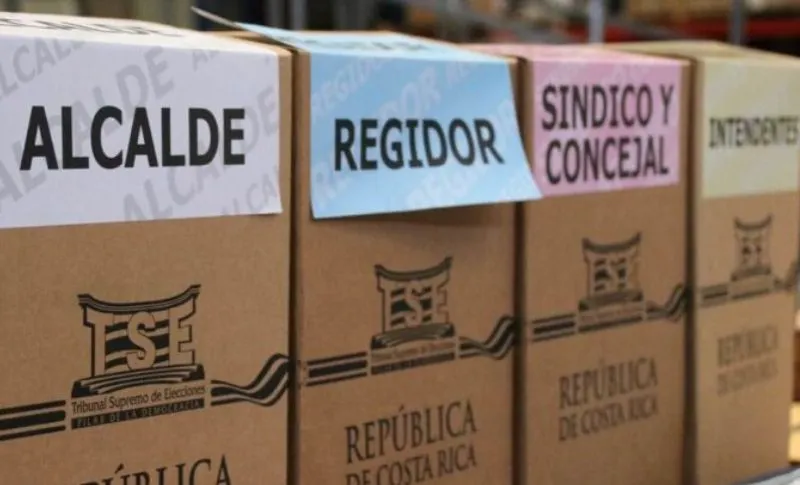
In May, local authorities—namely mayoralties, councilorships, syndicates, and superintendencies—will be completing one year since taking office. Elected in February 2024 to assume duties for the 2024–2028 period, you might remember them because they walked past your house asking for votes or in photos on social media greeting neighbors and acquaintances.
The truth is, they have already been making decisions for a year that affect or benefit our daily lives, because of course, they are the ones who approve fees for the collection of waste services and decide where and how the resources of our Local Governments are invested; they are the same people who define cantonal public policies and the direction of highway investments, among other tasks.
From CÍVICA, we analyzed the approved and available minutes of the Municipal Councils of Acosta, San José, Alajuela, Sarchí, Tilarán, Golfito, Heredia, Pococí, and Paraíso. (The analyzed cantons were chosen randomly). We reviewed a total of 522 minutes of sessions held between May 2024 and February 2025 to determine whether the elected individuals are fulfilling one of their main responsibilities: attendance at Municipal Council sessions.
We believe that citizen access to information regarding the attendance of our local authorities at municipal sessions is a mechanism of participation that strengthens transparency in public management, allowing those who live in the canton to monitor the actions of their representatives and demand accountability for their decisions.
Analyzing who occupies these spaces, how they do it, and under what conditions is essential to evaluate the true scope of citizen participation and community oversight in the territories. Despite its importance, efforts to monitor our local governments are scarce; actions like publishing minutes or live streaming municipal sessions have been carried out, but it is necessary to have more tools and mechanisms for community oversight.
We conducted an analysis of the attendance at sessions of each of the members of the Municipal Councils. According to legislation, they must hold an ordinary session once a week and two extraordinary sessions per month. This analysis allowed us to identify the average participation of the members of the Municipal Council per canton, which can be seen below:
When analyzing the average of total participation by canton, it stands out that in San José, Alajuela, and Paraíso, the municipal representatives have a higher percentage of participation. On the contrary, the cantons of Tilarán, Golfito, and Acosta are those that have had the lowest participation during the first year of management, with the representatives of the canton of Acosta having the lowest percentage of attendance. It should be noted that the minutes of the municipal sessions do not indicate the reason for the absence of each person.
When we analyze each of the popularly elected positions, it can be observed that it is the alternate syndics who, on average, have the lowest attendance in the Municipal Councils; particularly in Acosta, alternate syndics have only attended 24% of the sessions, while in the case of the canton of Golfito, no attendance of these people is recorded in the sessions.
Another finding of this analysis is related to extraordinary sessions. According to current legislation, it is only possible to pay the diet amount for a maximum of two extraordinary sessions per month. It was observed that the days on which more representatives are absent from a session tend to coincide with those on which more than two extraordinary sessions are held per month. This means that if a councilor had already attended the two extraordinary sessions of the month, if an additional session was called, they did not show up.
In the canton of San José, two additional extraordinary sessions were reported during the analyzed period, while in Alajuela, one was recorded. In the cantons of Golfito, Heredia, and Paraíso, four extraordinary sessions were counted in each, and in Pococí, five. On the other hand, in the cantons of Acosta, Sarchí, and Tilarán, a recurring trend of non-attendance by councilors and syndics to extraordinary sessions is evident, regardless of whether the established minimum of two monthly sessions has been reached.
To find out the average attendance of each person holding an elected office, you can consult the following link, which presents the information broken down by canton, district, name, percentage of attendance, and political party. We invite you to use this data as a tool to exercise your right of access to information for community oversight and to monitor the active participation of your local authorities.
At CÍVICA we have posed the premise that democracies cannot deepen inequalities, which leads us to wonder: What should the incentives be in a democratic system so that people can effectively and efficiently fulfill the mandate entrusted to them by popular vote as local authorities under equal conditions?
Faced with this question, we allow ourselves to compare and analyze two variables: (1) the allowances (dietas) received by councilors and syndics, and (2) the geographical distance between the center of the district represented by the local authority and the location of the Municipality.
One of the main incentives is the allowance or payment that our local authorities receive when attending the Municipal Council sessions. While in a canton like Alajuela a councilor receives ₡268,276 for each session they attend, in Acosta for the same position and the same responsibilities each councilor is paid an allowance in the amount of ₡21,000 per session. These differences occur because the amount of the allowance currently varies according to the budget of each municipality; however, the responsibility in decision-making remains the same regardless of the canton to which they belong. For example, a councilor from the canton of Heredia receives almost 7 times more allowance than a councilor from the canton of Tilarán.
Another of the variables analyzed is the average distance traveled by people who hold the positions of representatives of their districts (syndics) in the Municipal Councils, since each canton is a unique case: while some representatives have to travel long distances from their homes to the administrative centers, others are just around the corner. This situation is worsened in those municipalities where there is no accessible public transportation service, which makes their mobility and effective participation in Council sessions even more difficult.
Similarly, those who hold the position of syndic receive a per diem payment for each attendance at meetings. In the case of principal syndics, this amount corresponds to 50% of the per diem assigned to a principal council member, while alternate syndics receive only 25% of that amount.
Through the Google Maps application, the distance was measured between the Municipal Council building of each canton and the most central point of each of its districts. It is important to note that these distances are approximate and may vary depending on the specific place of residence of each trustee. As can be observed in Table 3, the average distance is unequal (and even more so when analyzed individually); for cantons like Pococí and Golfito, they have to travel up to 19 km, while in communities like Heredia and San José, the distances are under 4 km, which in many cases facilitates their participation.
Some of the most interesting results when analyzed individually show that on average for the canton of Heredia, the trustees travel 2.25 km; however, the representative of the Vara Blanca district has to travel 31 km to attend the sessions, and despite this, has an average individual participation rate of 94.37%.
Another outstanding example is the case of the trustee from the Colorado district, in the canton of Pococí, who must travel approximately 68 km to attend the Municipal Council sessions. Despite this considerable distance, they maintain an average attendance rate of over 70%. We do not know if they have their own means of transportation or if they rely on public transit to make these trips, but without a doubt, this case highlights the inequalities faced by representatives.
This analysis has also allowed us to identify that in at least 5 of the studied cantons (Alajuela, Heredia, San José, Paraíso, Pococí), the proprietary trustees receive a higher amount in allowances than the proprietary regidors of Acosta, Golfito, Sarchi, and Tilarán. These differences generate inequalities that must be addressed and resolved to create equal conditions for representatives.
These situations could limit access to these positions for people with less ability to allocate their own resources to carry out their work or with less access to transportation, indirectly affecting equity and representativeness in local decision-making. "Local democracies cannot depend on the amount (availability) of resources of each of the individuals who assume a role as authorities."
One year after taking office, the local authorities elected in February 2024 have had a direct impact on the lives of their communities through key decisions on public services, resource investment, and the definition of cantonal policies. However, this first year has also highlighted notable differences in the levels of participation and fulfillment of their main responsibility: digital and physical attendance at Municipal Council sessions.
Among the main limitations found during this analysis, the lack of access to public information stands out. Currently, not all Municipal Councils update the minutes on their websites, even though current legislation requires it. Furthermore, in many cases, the documents are not available in formats accessible to people with visual impairments, representing a major barrier to the full exercise of the citizen's right to oversight.
This situation highlights the urgent need to strengthen data openness regulations, standardize publishing formats, and guarantee universal accessibility as a basic principle of institutional transparency, primarily on the part of the most important neighbor, the Muni. Only then will it be possible to move towards a real, equitable, and effective community oversight of local authorities.
Taken together, all these findings and the difficulty of accessing this data lead us to question how equitable the local democratic system is and invite us to rethink the mechanisms that the State must guarantee so that all elected officials, regardless of their place of residence or socioeconomic status, can exercise their public duties under equal conditions, because democracy, in effect, cannot be unequal.
Data is evidence, and seeing it clearly is the first step toward transformation. Share this information to drive a more informed and active citizen participation.
Follow us on Instagram at @civicacr to learn about upcoming investigations and tools that promote democracy from the local level.